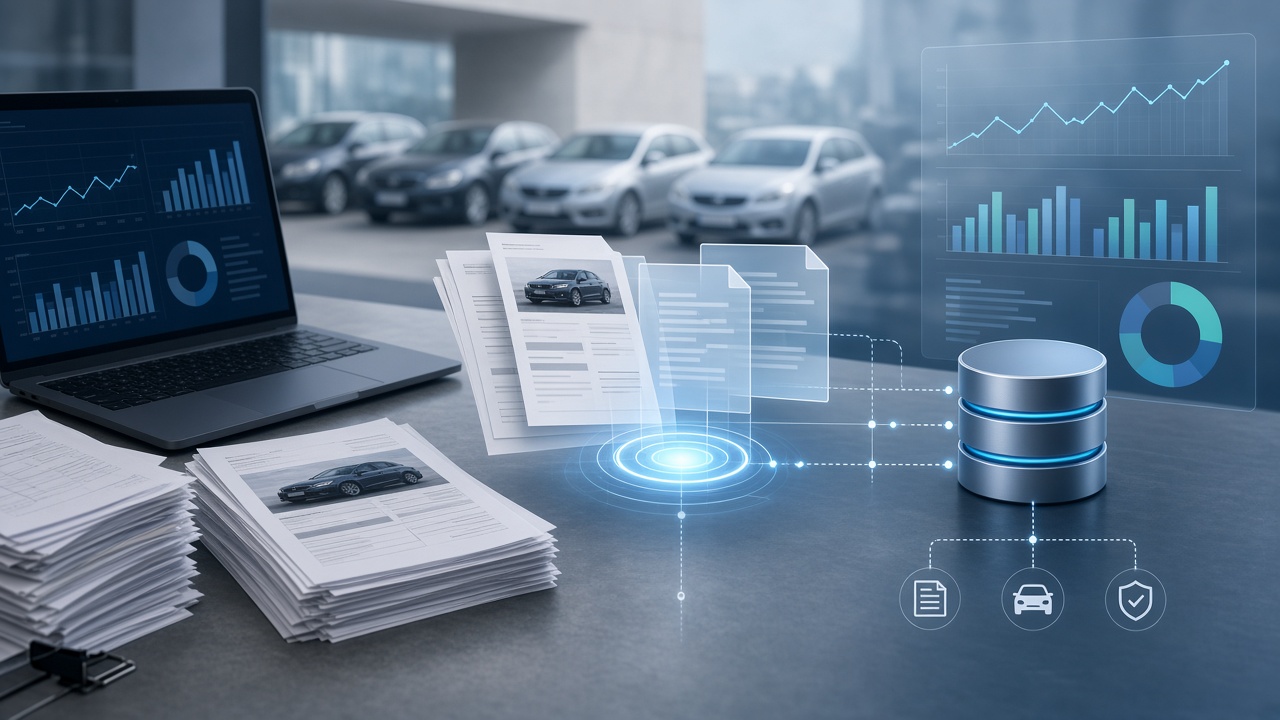
A representative fleet lessor in Germany received dealer invoices, vehicle specifications, registration records, and delivery confirmations through several channels. Operations specialists opened each PDF, copied values into the asset database, and checked that the invoice matched the approved vehicle order.
The process worked, but it did not scale. Month-end volume created queues, differently formatted dealer invoices slowed operators down, and a mistyped VIN could break the link between the vehicle and its lease contract.
The manual intake problem
The composite operation processed about 3,200 documents per month. A specialist spent an illustrative average of 11.4 minutes on each invoice package: opening attachments, identifying the supplier, entering the VIN and totals, and checking tax and purchase-order references.
The important requirement was not simply to read text. The workflow had to preserve relationships between the dealer, vehicle, invoice, and contract while routing uncertain records to a reviewer.
How the automated flow was designed
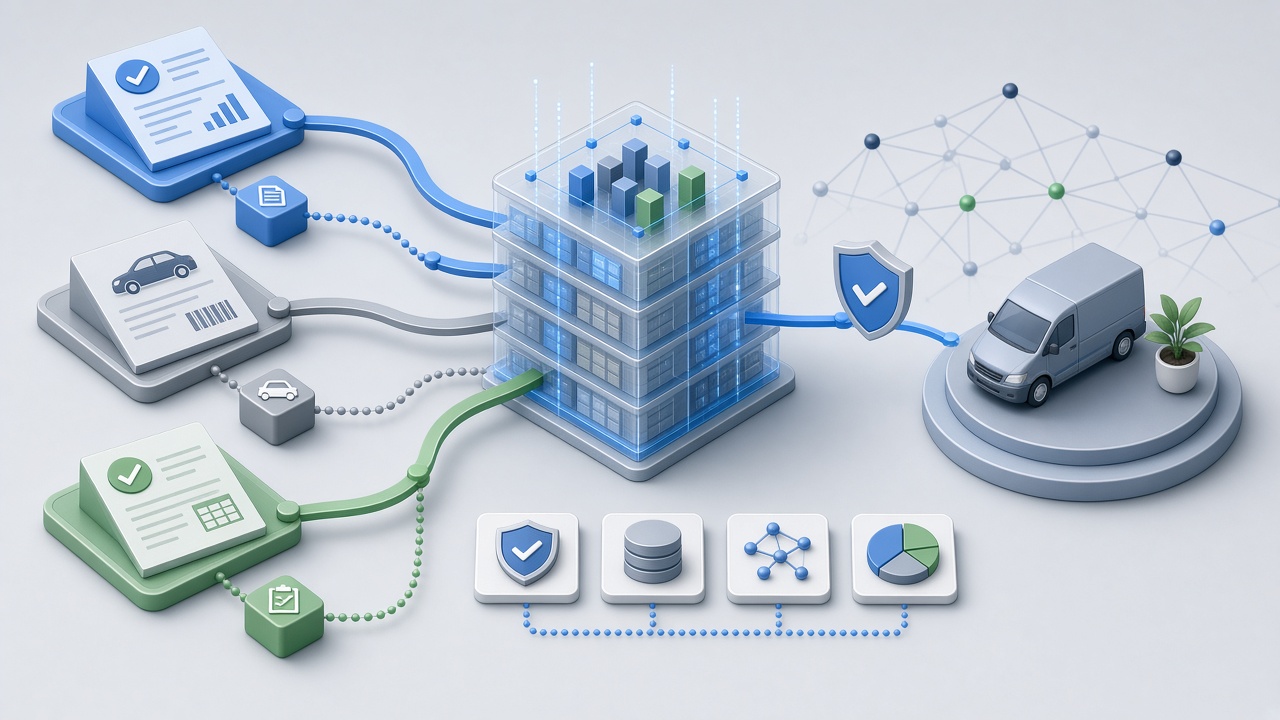
Incoming files were collected from a controlled mailbox and assigned a processing ID. The integration sent each document to ConvertToData and requested JSON. The result then passed through four validation stages:
- Confirm that invoice number, supplier, VIN, currency, and total are present.
- Normalize German date and decimal formats.
- Match the VIN and purchase-order number to an approved vehicle order.
- Recalculate net amount, VAT, and gross total before creating the asset record.
Records that passed all checks were loaded into the leasing database automatically. Missing identifiers, duplicate invoice numbers, and total mismatches entered a review queue with the source PDF attached.
Example JSON produced for the integration
{
  "documentType": "dealer_invoice",
  "invoiceNumber": "DE-2026-10482",
  "invoiceDate": "2026-08-17",
  "supplier": "Example Autohaus GmbH",
  "vehicle": {
    "vin": "WVWZZZ00ZEXAMPLE1",
    "description": "Passenger vehicle"
  },
  "currency": "EUR",
  "netAmount": 31420.00,
  "vatAmount": 5969.80,
  "totalAmount": 37389.80
}
Illustrative operating impact
In the modeled steady state, 82% of standard dealer invoices completed straight-through processing. Operators focused on exceptions instead of retyping every field, and the asset database received consistent dates, amounts, and vehicle identifiers.
What made the implementation reliable
The main success factor was validation around OCR. The source file remained linked to every database record, duplicate detection used both invoice number and supplier, and no payment-related record was released when totals failed to reconcile.
This pattern is suitable for fleet lessors that receive repeatable invoice packages from many dealers while maintaining strict control over vehicle and contract identifiers.