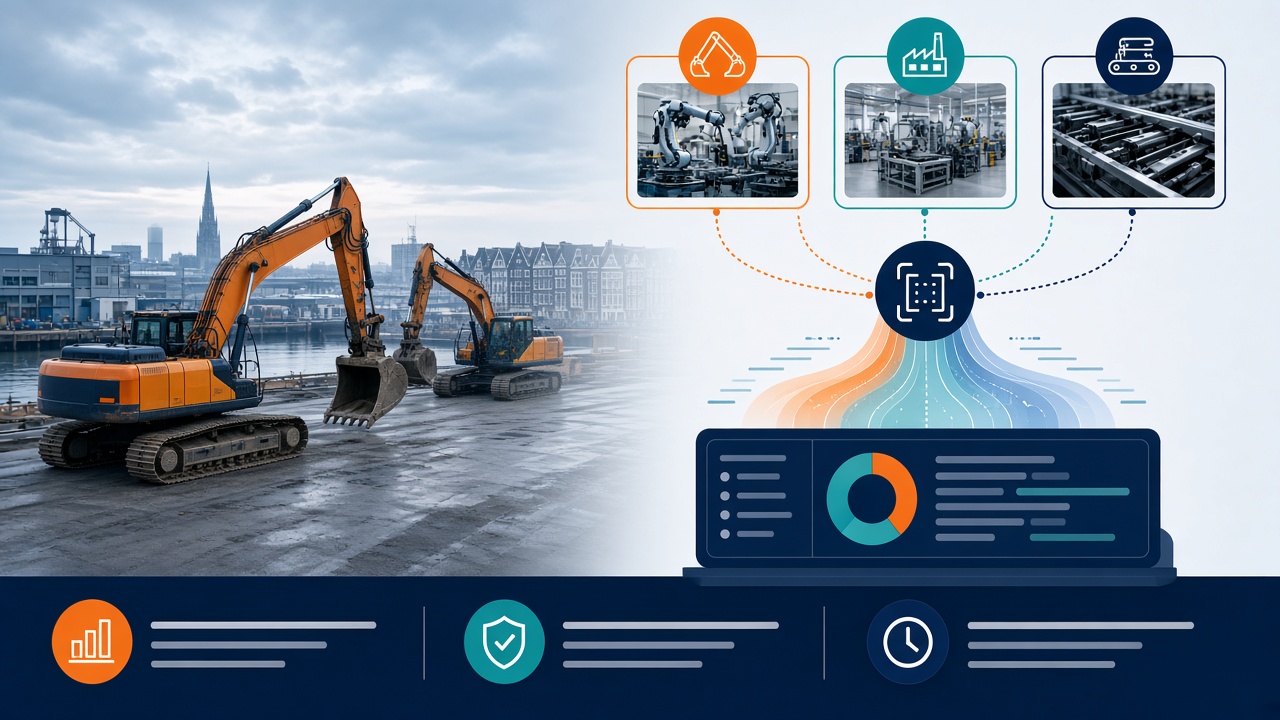
An equipment leasing team in the Netherlands received financing requests from brokers, machinery dealers, and direct customers. Each request contained a different combination of supplier quote, equipment specification, customer application, and maintenance option.
Before automation, a credit coordinator created the case manually and re-entered the asset description, serial or model number, purchase price, deposit, lease term, and supplier details. The work was repetitive, but the documents were too varied for a fixed spreadsheet import.
A document package rather than a single invoice
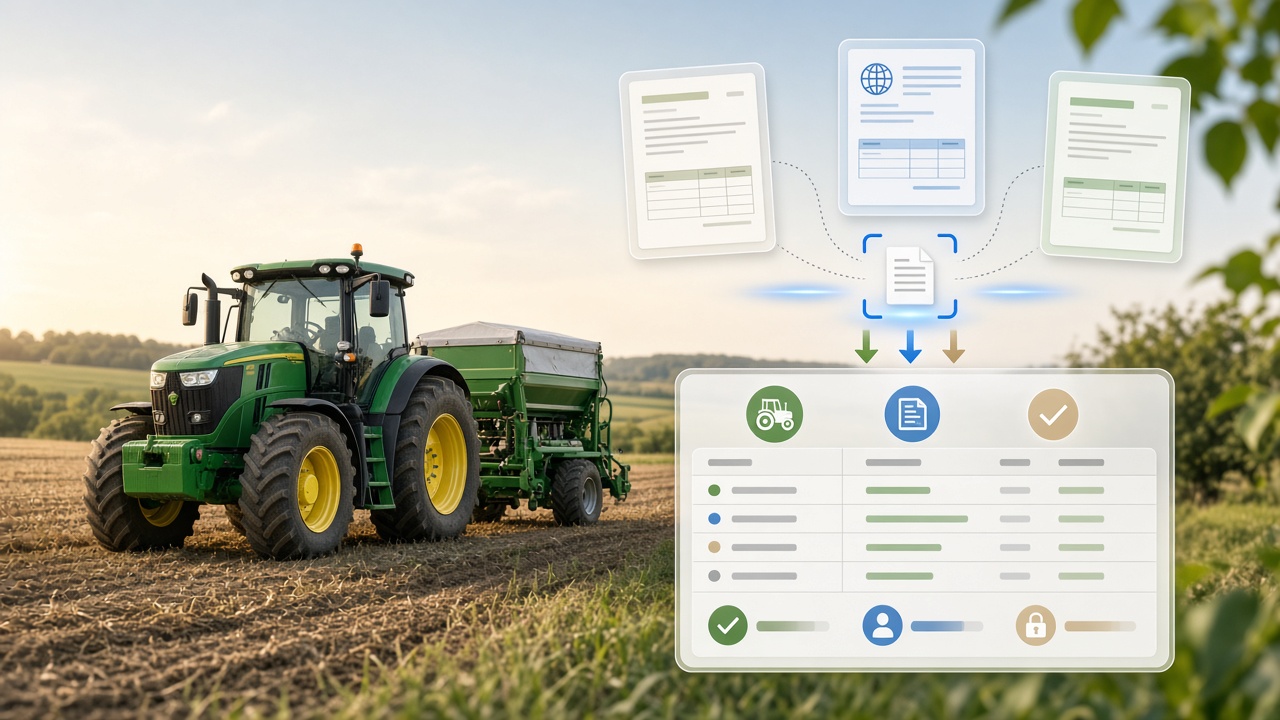
The challenge was assembling several documents into one decision-ready record. A price on the quote had to agree with the requested financed amount, optional attachments had to be separated from the core asset price, and every case needed a traceable source.
Integration into the credit workflow
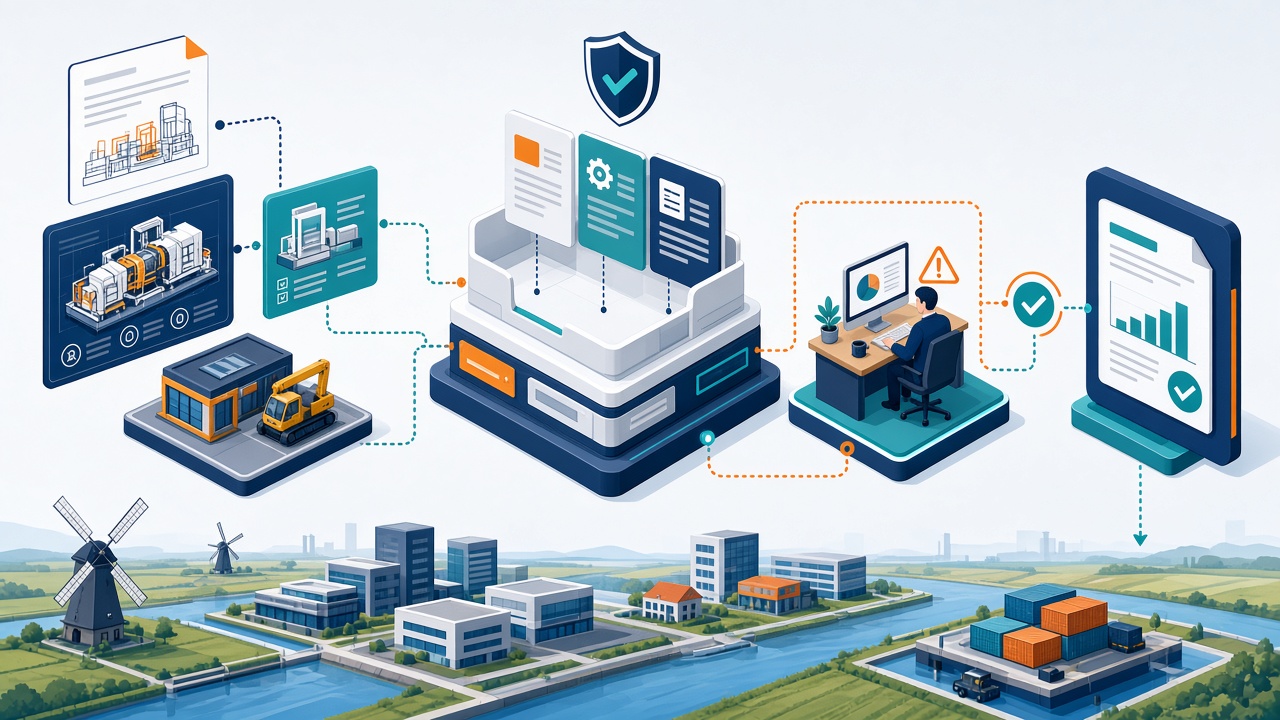
The intake service grouped attachments by application ID. ConvertToData extracted each file into JSON, after which a mapping layer combined common fields into a single case object. Rules classified amounts as base asset, optional equipment, delivery, or maintenance.
The resulting record was posted to the credit platform. If the supplier, asset category, currency, or requested amount could not be validated, the case paused before credit scoring and displayed the original page to an operator.
Example structured result
{
  "applicationId": "NL-EQ-2026-00841",
  "documentType": "supplier_quote",
  "supplier": {
    "name": "Example Machinery B.V.",
    "country": "NL"
  },
  "asset": {
    "category": "construction_equipment",
    "description": "Electric excavator",
    "modelYear": 2026
  },
  "pricing": {
    "basePrice": 184000.00,
    "options": 12500.00,
    "total": 196500.00,
    "currency": "EUR"
  }
}
Illustrative reduction in case setup time
The representative workflow reduced repeated data entry while retaining a human decision at the credit stage. Coordinators reviewed exceptions and commercial terms instead of copying basic asset fields from PDFs.
Why this case differs from invoice automation
A supplier quote is not an accounting record. Values must be interpreted in the context of a proposed lease, and optional items may affect residual value differently. The integration therefore preserved line-level data and provenance rather than sending only a total.
This design is useful for equipment finance teams that need faster case creation without weakening underwriting controls.