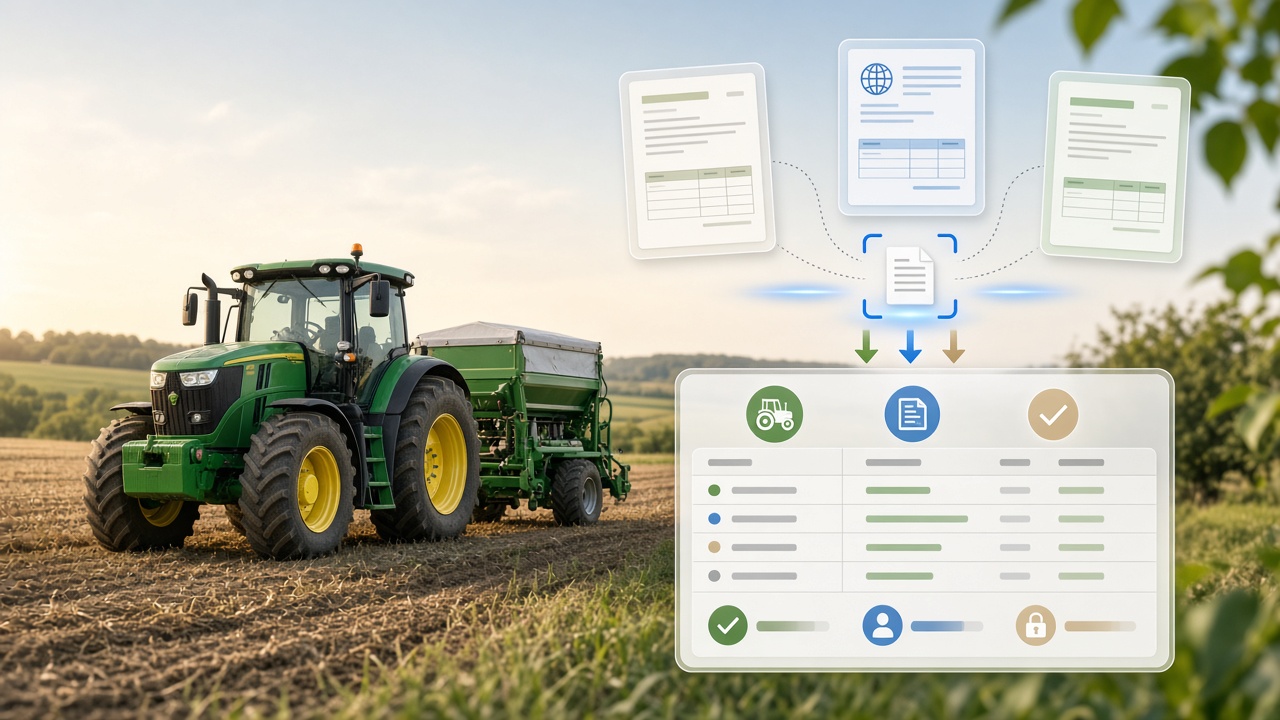
A representative agricultural leasing provider in Poland experienced sharp application peaks before planting and harvest seasons. Dealers submitted machinery invoices and specifications in Polish, German, and English, often with model codes, attachments, and discounts presented in different layouts.
Temporary staff helped with data entry during peak periods, but training took time and inconsistent terminology created avoidable corrections. The objective was to create one normalized asset record regardless of document language.
The multilingual data challenge
Recognition language was only one part of the problem. The integration also had to normalize dates, decimal separators, currencies, units, and equivalent field labels. A German “Seriennummer” and Polish “numer seryjny” both needed to map to the same database field.
Language-aware extraction and normalization
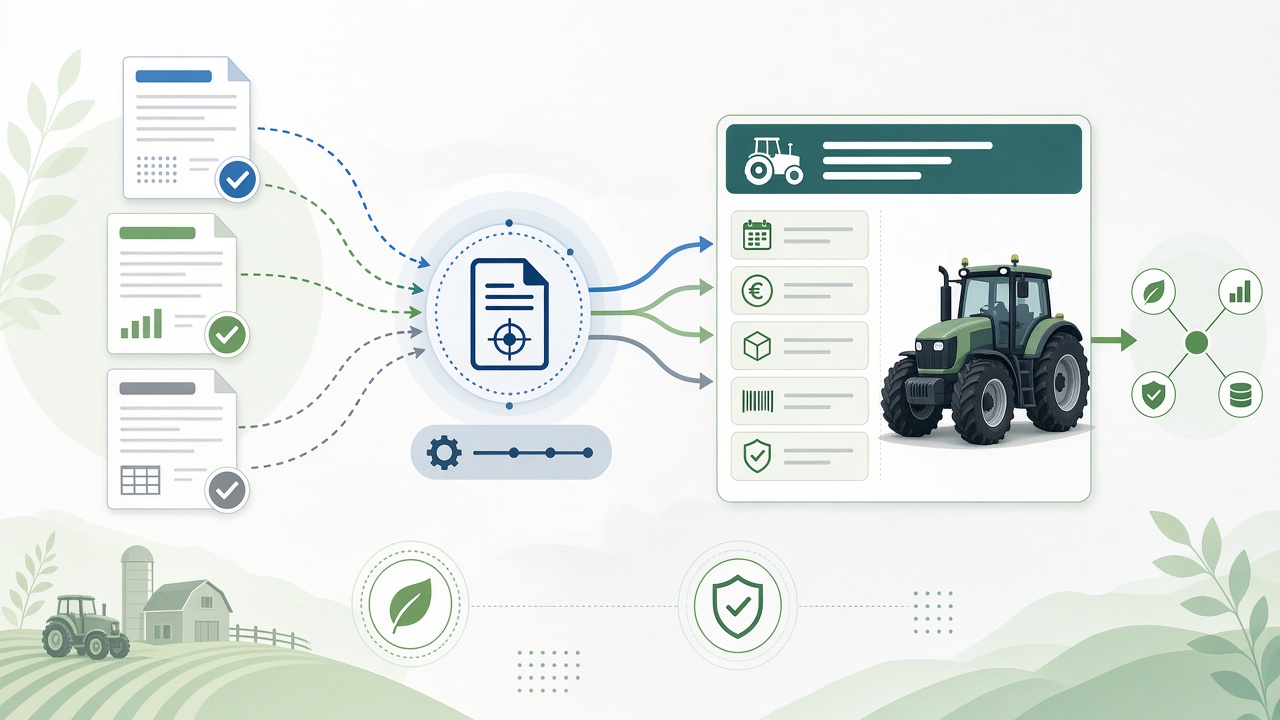
The intake process selected recognition languages from dealer metadata when available and allowed multiple languages for mixed document packs. ConvertToData returned structured fields; a normalization layer then converted local values to the formats expected by the leasing platform.
- Dates were stored in ISO 8601 format.
- Amounts were converted to numeric values without display separators.
- Power and capacity units were mapped to canonical units.
- Dealer model descriptions were matched to controlled asset categories.
- Serial numbers remained strings to preserve leading zeros.
Example normalized JSON
{
  "documentType": "proforma_invoice",
  "documentNumber": "PF/09/2026/184",
  "sourceLanguage": "pl",
  "asset": {
    "category": "agricultural_tractor",
    "description": "Tractor, 180 hp",
    "serialNumber": "PL-TR-EXAMPLE-8821"
  },
  "deliveryDate": "2026-10-15",
  "amount": {
    "net": 486000.00,
    "currency": "PLN"
  }
}
Illustrative performance during a seasonal peak
In the modeled process, standard dealer documents moved directly into the application record while about 18% entered review. The exception queue was valuable: it separated unusual documents from the seasonal bulk instead of forcing every application through the same manual path.
Operational lessons
Multilingual automation requires controlled terminology after recognition. Teams should maintain mappings for asset categories and units, test documents from every major dealer, and keep the original language visible to reviewers.
The approach is especially useful where demand is seasonal and adding data-entry capacity for a few weeks each year is expensive and difficult to manage.